

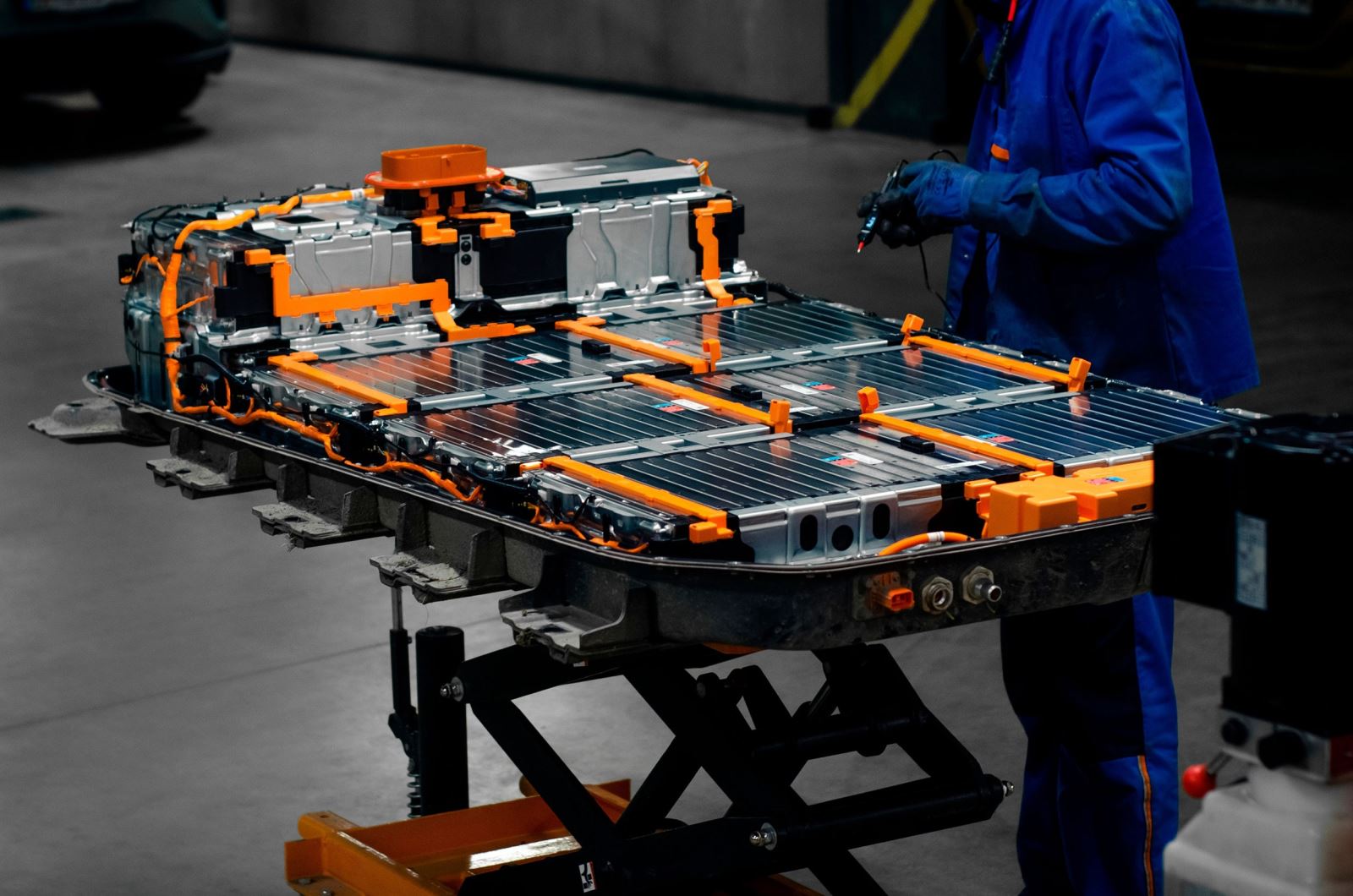
 Battery Testing High-voltage battery systems impose strict requirements on measurement safety and signal accuracy. Measuring high currents, high voltages, and fast transients requires a data acquisition system with full electrical isolation, overvoltage withstand capability, and strong immunity to electromagnetic interference.
In tests such as short-circuit, overcurrent, or protection device evaluation (pyro-fuse, contactor), the measurement system must capture peak currents in the kiloamp range at very high sampling rates while still ensuring accurate accumulated energy calculation. At the system level, battery data must be synchronized with BMS, ECU, and testbench information via communication protocols such as CAN, CAN FD, XCP, or FlexRay. This allows direct comparison between measured values and control algorithms, enabling evaluation of cell balancing strategies, thermal management, and safety limits.
Beyond abuse testing, high-voltage tests also include harmonic analysis, THD, DC/AC impedance, and transient response under dynamic load conditions. These data form the basis for cell design optimization, material selection, and verification of compliance with international safety standards. As batteries continue to increase in energy density, safe and accurate measurement is no longer optional—it is a mandatory requirement.