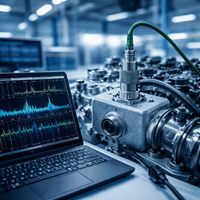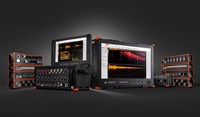


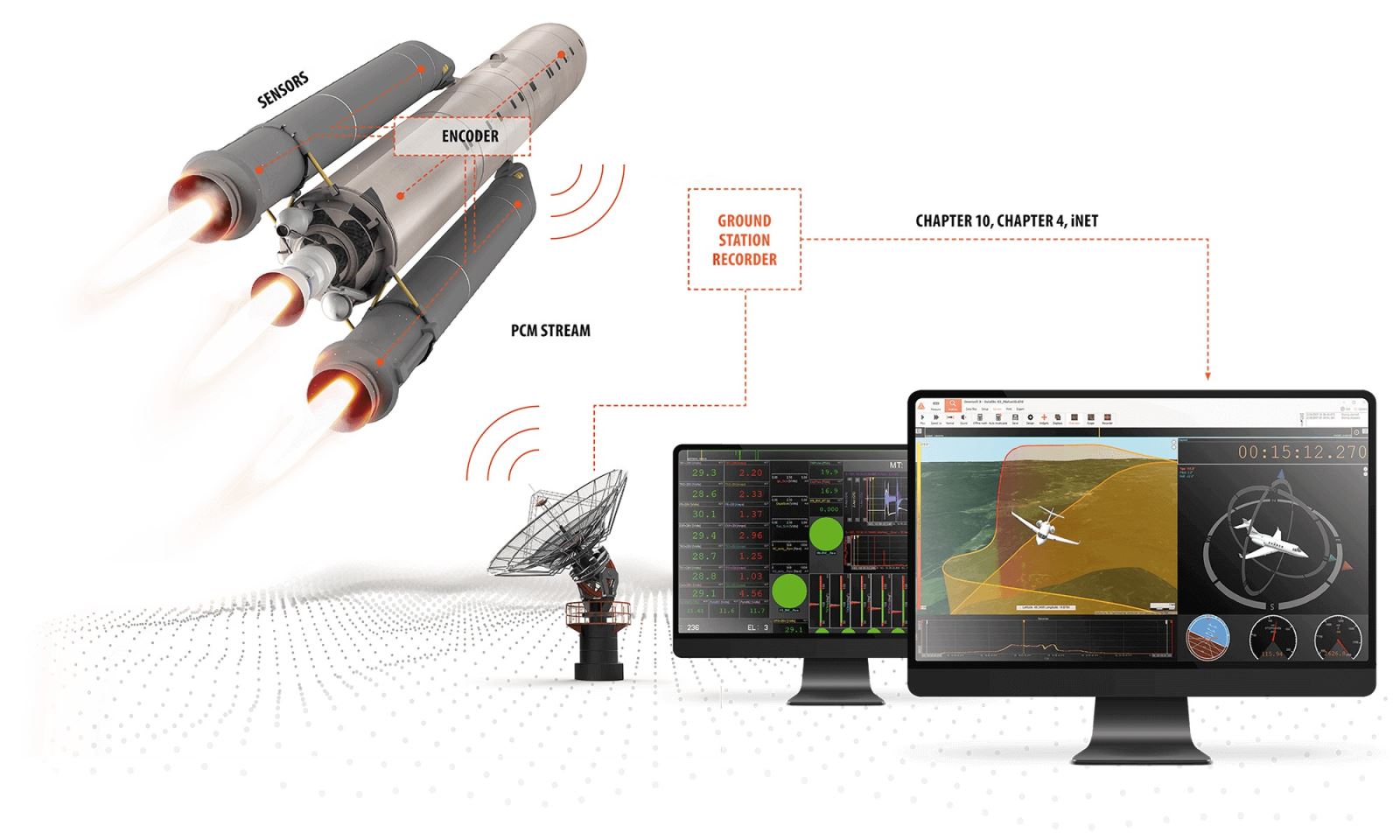
 Ground Station Telemetry Ground Station Telemetry plays a central role in flight test programs, enabling real-time acquisition, decoding, visualization, and analysis of telemetry data from airborne vehicles. A ground station does not merely “receive flight data”—it integrates multi-source data in real time. The system collects, decodes, and synchronizes IRIG 106 Chapter 4/10 telemetry data together with direct analog sensor measurements and system bus data.
The integration of PCM telemetry, iNET streams, ARINC 429, MIL-STD-1553, CAN bus, GNSS/IMU, and video within a single platform allows engineers to comprehensively analyze flight behavior. Flight parameters, control status, structural loads, vibration, and noise can be observed and correlated instantly using visualization tools such as recorder, oscilloscope, FFT, GPS maps, artificial horizon, and 3D models.
The system supports flexible PCM decoding (commutated, super-commutated, sub-commutated), TMATS, absolute timing, and data storage in both packed and unpacked formats. This optimizes telemetry bandwidth while preserving the ability for detailed post-processing analysis when required.