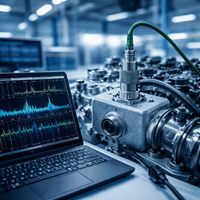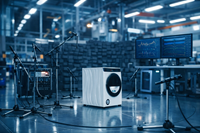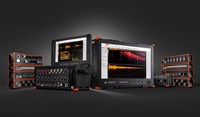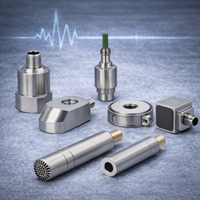


In R&D and product testing, measurement data rarely comes from one simple signal. A real test setup may include vibration, sound, strain, force, pressure, temperature, voltage, current, rotational speed, encoder pulses, CAN data, and software-based calculated channels.
SIRIUS DAQ is built for applications that require accurate dynamic signals, flexible expansion, and a unified analysis workflow. Instead of recording raw data only, the system allows engineers to configure channels, synchronize signals, monitor data in real time, analyze results in DewesoftX, and create reports in the same working environment.
Engineering summary
SIRIUS is suitable for R&D, product validation, laboratory testing, vibration analysis, NVH, modal testing, strain measurement, force measurement, pressure measurement, temperature measurement, and electrical testing.
A well-configured SIRIUS system is defined by the measurement target, not only by the number of channels. The key questions are signal type, expected amplitude, frequency range, overload risk, synchronization requirements, test environment, and analysis workflow.
SIRIUS supports a wide range of amplifier and input options for common engineering signals, including voltage, high voltage, IEPE, charge, strain gauge, load cell, thermocouple, RTD, LVDT, current, counter, encoder, digital, and CAN signals depending on configuration.
For dynamic signals, SIRIUS configurations using DualCoreADC technology help extend dynamic range and reduce clipping risk when the signal amplitude changes unexpectedly. This is especially important for vibration, impact, strain, pressure pulses, sound, and other applications where small and large events may occur in the same measurement.
Choosing the correct amplifier is essential. A test may require IEPE inputs for accelerometers, STG inputs for strain/load cells, HV or LV inputs for voltage, CHG inputs for charge sensors, TH or RTD inputs for temperature, counter/encoder inputs for rotational speed, and CAN input for ECU or controller data.
In R&D, SIRIUS helps engineers understand the root cause of a technical issue rather than only recording pass/fail results. When a product shows vibration, noise, deformation, heat, or abnormal force, several signals can be reviewed in one synchronized data file.
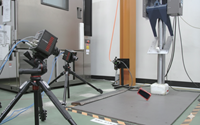
In NVH, vibration analysis, and modal testing, clean signals, time alignment, and frequency-domain analysis are critical. SIRIUS can combine accelerometers, microphones, force sensors, impact hammers, tachometers, and encoders for FFT, order analysis, octave analysis, modal analysis, and structural dynamics workflows.
SIRIUS X and SIRIUS XHS extend the platform for applications that need more modern connectivity, higher channel count, CAN FD, or high-speed transient recording. SIRIUS XHS is especially relevant for high-speed events, power electronics, inverter testing, short pulses, and applications where microsecond-level behavior must be captured.
DewesoftX connects the hardware to the engineering workflow. Engineers can configure channels, manage sensor data, build displays, monitor signals, create math channels, analyze data, and generate reports in one environment.
A SIRIUS system should be configured from the measurement objective: physical quantity, range, bandwidth, accuracy, environment, synchronization, and final decision process. When these factors are considered from the beginning, the system becomes more stable, the data becomes easier to analyze, and the test workflow becomes more repeatable.
SIRIUS DAQ is a flexible measurement platform for accurate dynamic signals, multi-sensor testing, and unified analysis. From R&D and product testing to NVH, vibration, modal testing, strain, force, pressure, temperature, electrical signals, and CAN data, it helps engineers build a measurement system that can grow with the application.