What Is ADAS?

20/07/2024
Overview ADAS - Advanced Driver Assistance Systems

ADAS (Advanced Driver Assistance Systems) refers to a broad range of technologies designed to assist the driver, improve road safety, and gradually move the automotive industry toward automated driving. In this article, we introduce the basic concept of ADAS, its purpose, the technologies behind it, and how these systems form the foundation of future autonomous vehicles.

This is Part 1 of 4 in our ADAS series:

  • Part 1: What is ADAS? (this article)
  • Part 2: Types of ADAS sensors used today
  • Part 3: How are ADAS systems and autonomous vehicles tested?
  • Part 4: ADAS standards and safety protocols

In this series, you will learn enough to understand what ADAS is, why it is becoming one of the most important development areas in modern mobility, how sensing and decision-making work inside these systems, and how ADAS is driving the transition from assisted driving to autonomous driving.

ADAS technology overview

ADAS deployed on multiple vehicle types

What is the purpose of ADAS?

ADAS includes both passive and active safety systems developed to reduce the human-error component in vehicle operation. These systems use advanced technology to support the driver during driving, improve situational awareness, and enhance overall driving performance and safety.

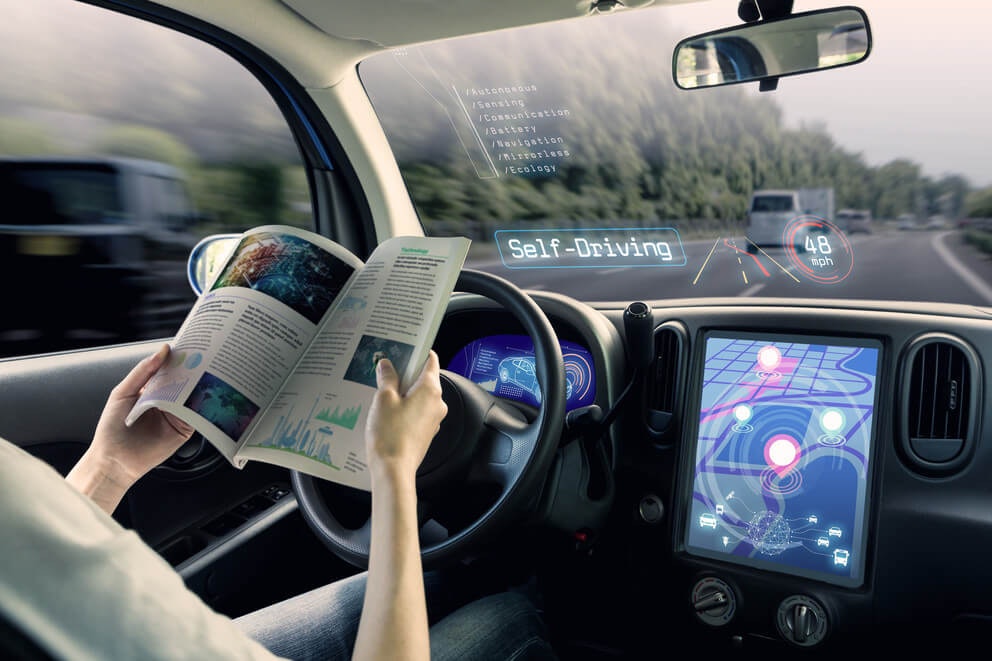
ADAS uses combinations of sensing technologies to detect and understand the world around the vehicle. The system then provides information to the driver or performs an action when necessary. In other words, ADAS is not merely a warning feature. It is a complete technological architecture that integrates sensors, signal processing, software, and vehicle control logic.

Today, ADAS is being applied not only in passenger cars, but also in trucks, buses, agricultural machinery, construction vehicles, and military platforms. This shows that ADAS is no longer a niche premium feature. It has become a core enabling technology for a wide range of modern mobility systems.

According to NHTSA, more than 36,000 people were killed in motor vehicle crashes in the United States in 2019 alone. Earlier NHTSA findings also indicated that around 94% of crashes involve human error. This is exactly why ADAS is seen as a technology with strong life-saving potential: it helps reduce mistakes in observation, judgment, and reaction.

Because a very large share of road accidents is related to human error, it is easy to understand why ADAS has become one of the most important investment areas in the global automotive industry. IIHS has estimated that even currently available ADAS technologies could help prevent or mitigate about 1.8 million crashes per year and potentially save up to 10,000 lives annually.

ADAS exists in many forms and levels. At the simplest level, it can be a backup camera or blind-spot warning sensor. At more advanced levels, it includes lane departure warning, adaptive cruise control, lane keeping, self-parking, and other active driving functions.

Ultimately, the final extension of ADAS will be truly self-driving vehicles - vehicles capable of making decisions and operating without continuous human control. While fully autonomous driving remains a highly complex goal, today’s ADAS features are already making driving safer in practical everyday use.

Companies around the world are investing billions of dollars in this field. It is difficult to find a major automotive manufacturer that is not committing substantial resources to ADAS. General Motors, Volvo, Toyota, Ford, Volkswagen, Tesla, BMW, and Audi are only a few examples from a much longer list. ADAS technology is evolving rapidly, and no one wants to be left behind.

ADAS sensing technologies in modern vehicles

Different ADAS sensor types used in autonomous vehicles today

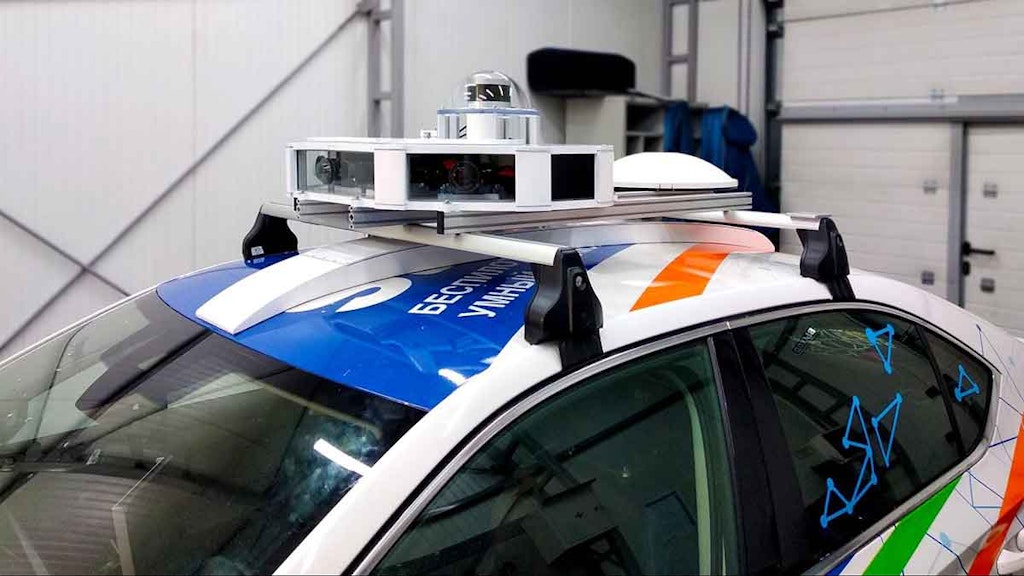
Autonomous test vehicle with roof sensor array

Autonomous test vehicle with a roof-mounted sensor array

How does ADAS work?

ADAS works by warning the driver about hazards, or in many cases by taking action to avoid an accident. Vehicles equipped with ADAS can sense their surroundings, process large amounts of information inside onboard computing systems, and generate accurate outputs for either the driver or the vehicle control system.

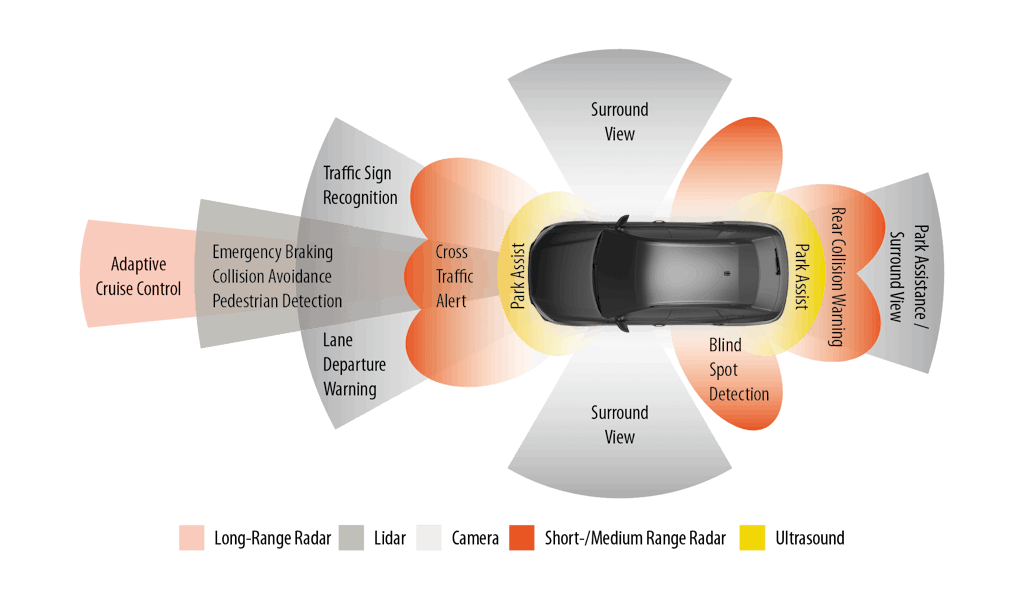
An ADAS-equipped vehicle typically includes a range of advanced sensors that enhance the driver’s “eyes,” “ears,” and decision-making capability. Humans do not see well in darkness, but RADAR can detect objects in such conditions. Humans cannot echolocate like bats or dolphins, but SONAR can help detect obstacles behind the vehicle while reversing. Humans cannot look in all directions at once, but cameras and LiDAR can. Humans also cannot know their exact latitude and longitude at every moment, but global navigation satellites can provide that data to the car.

The ADAS system architecture therefore includes a sensor set, communication interfaces, and a powerful computer processor capable of integrating all incoming information and making decisions in real time. These sensors continuously monitor the environment around the vehicle and feed information to onboard ADAS computers for prioritization and action.

Today, these technologies are already helping save lives by preventing accidents that might otherwise occur. In the future, these same technologies will lead to fully autonomous vehicles.

Passive and active ADAS systems

ADAS is commonly divided into two large categories: passive systems and active systems. The key difference is whether the system only warns the driver or directly intervenes in vehicle control.

Passive ADAS systems

In passive ADAS, regardless of how many sensors are installed, the computer mainly informs the driver about unsafe conditions. The driver must then act to prevent the situation from developing into an accident.

Typical warning methods include audible alerts, flashing lights, visual displays, and sometimes haptic feedback. One example is a vibrating steering wheel warning the driver that the adjacent lane is occupied - a typical blind-spot detection response.

Common passive ADAS functions include:

  • ABS - Anti-lock Braking System: prevents wheel lock and loss of control during emergency braking.
  • ESC - Electronic Stability Control: helps the driver avoid instability, especially in cornering or sudden maneuvers.
  • TCS - Traction Control System: supports traction maintenance during acceleration or cornering.
  • Back-up Camera: provides a rear view during reversing and parking.
  • LDW - Lane Departure Warning: alerts the driver when the vehicle leaves its lane.
  • FCW - Forward Collision Warning: warns of a possible collision ahead.
  • Blind Spot Detection: warns of vehicles in the blind zone.
  • Parking Assistance: warns when approaching obstacles at low speed.

Passive ADAS functions and autonomous test vehicle

ADAS sensor fusion and control architecture

Active ADAS systems

In active ADAS, the vehicle can take direct action rather than stopping at driver warning. This is a major technological step because the system is no longer limited to awareness support - it becomes part of the driving control loop.

Representative active ADAS functions include:

  • Automatic Emergency Braking: automatically brakes to avoid or reduce the severity of a collision with a vehicle, pedestrian, animal, or obstacle ahead.
  • Emergency Steering: steers to help avoid an object in the driving path.
  • Adaptive Cruise Control: adjusts speed to maintain distance from the vehicle ahead.
  • Lane Keeping Assist / Lane Centering: helps keep the vehicle in or near the center of the lane.
  • Traffic Jam Assist: combines adaptive cruise control and lane keeping to support semi-automated driving in dense traffic.
  • Self Parking: automatically maneuvers the vehicle into a parking space.

More broadly, ADAS functions can be grouped into:

  • Collision Warning: blind-spot warning, forward collision warning, lane departure warning, parking collision warning, rear cross-traffic warning.
  • Collision Interventions: automatic emergency braking, automatic emergency steering, reverse automatic braking.
  • Driving Control Assistance: adaptive cruise control, active driving assistance, lane-keeping assistance.
  • Parking Assistance: active parking assistance, remote parking assistance, trailer assistance.

Other driver support systems

In addition to the core functions above, ADAS also includes a variety of supporting systems that improve awareness, convenience, and driving safety:

  • Advanced Forward Lighting Systems: adaptive front lighting based on changing driving conditions.
  • Backup Camera: displays the area behind the vehicle during reversing.
  • Brake Assist: detects emergency braking intent and boosts brake pressure to shorten stopping distance.
  • Driver Monitoring: monitors the driver to determine engagement in the driving task.
  • Electronic Stability Control: brakes individual wheels or reduces engine power to maintain stability.
  • Heads-up Display: projects critical driving or navigation information into the driver’s forward field of view.
  • Night Vision: supports night driving by displaying enhanced imaging.
  • Roll Stability Control: reduces rollover risk during severe cornering or avoidance maneuvers.
  • Speed Alert: reminds or warns the driver about current or excessive speed.
  • Surround-view Camera: provides a full view around the vehicle.
  • Tire Pressure Monitoring: tracks tire pressure on all wheels.
  • Traction Control: reduces wheel slip during acceleration.

Overall, ADAS is not a single function but a multilayer technology ecosystem developed to support the driver in a wide variety of traffic situations.

Highway near urban traffic area

Highways near urban areas are prime candidates for traffic-flow optimization

Vehicle autonomy levels overview

The six levels of vehicle autonomy

The final extension of ADAS is full autonomy - vehicles capable of driving without direct human control. To describe this progression, the U.S. Department of Transportation has adopted the six levels of automation developed by SAE:

  • Level 0 - No Automation: the driver fully controls the vehicle. Systems like ABS may exist, but they do not truly “drive” the vehicle.
  • Level 1 - Driver Assistance: the vehicle provides one driving-assistance function, such as cruise control or adaptive cruise control.
  • Level 2 - Partial Driving Automation: the vehicle can steer, accelerate, and brake in certain conditions, but the driver must remain ready to take over.
  • Level 3 - Conditional Driving Automation: the vehicle can make some decisions based on traffic conditions, but a human must still be available to intervene.
  • Level 4 - High Driving Automation: the vehicle can drive itself within limited geographic areas, road types, or speed domains.
  • Level 5 - Full Driving Automation: the vehicle requires no human interaction at all, potentially eliminating the need for a steering wheel or pedals.

Today, most high-volume commercial systems are still in the Level 1 to Level 2 range, while Level 4 remains limited to specific use cases such as robotaxis or tightly controlled operating routes.

Types of autonomous vehicles

Today, several categories of autonomous vehicles are under active development:

  • Passenger vehicles
  • Robotaxis and ride-sharing vehicles
  • Heavy and light commercial transport vehicles

Passenger vehicles and fully autonomous taxis remain the ultimate goal of this technology. However, even long before reaching 100% autonomy, we are already benefiting from ADAS through collision avoidance, backup cameras, parking sensors, adaptive cruise control, and blind-spot detection. These technologies have already made driving measurably safer.

A frequently cited example is Tesla’s Level 2 “Autopilot.” While it may not be the most advanced self-driving technology on the market, it is one of the most widely recognized because of Tesla’s global visibility. Self-driving technology and electric vehicles align naturally because both depend heavily on software and computing.

Robotaxis and ride-sharing vehicles are another important application area. Companies such as Waymo, TuSimple, Plus AI, and others have invested heavily in autonomous mobility. Major ride-sharing companies like Uber and Lyft have also pursued this area because self-driving technology has the potential to replace the most significant operating cost in the service model: the human driver.

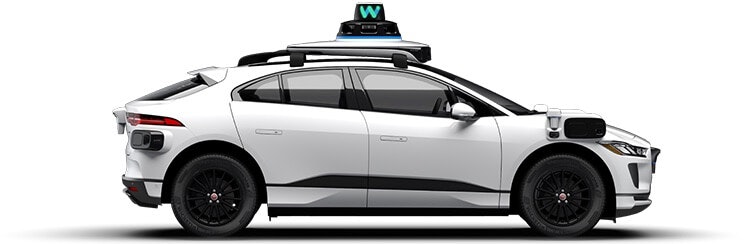
Waymo is a leading example. It is a U.S. subsidiary of Alphabet, Google’s parent company. In the Phoenix metro area, people can request Waymo One rides via smartphone app. The service is considered Level 4 autonomy, but only within predefined routes and known operating conditions.

Waymo One driverless taxi

Typical Waymo One driverless taxi

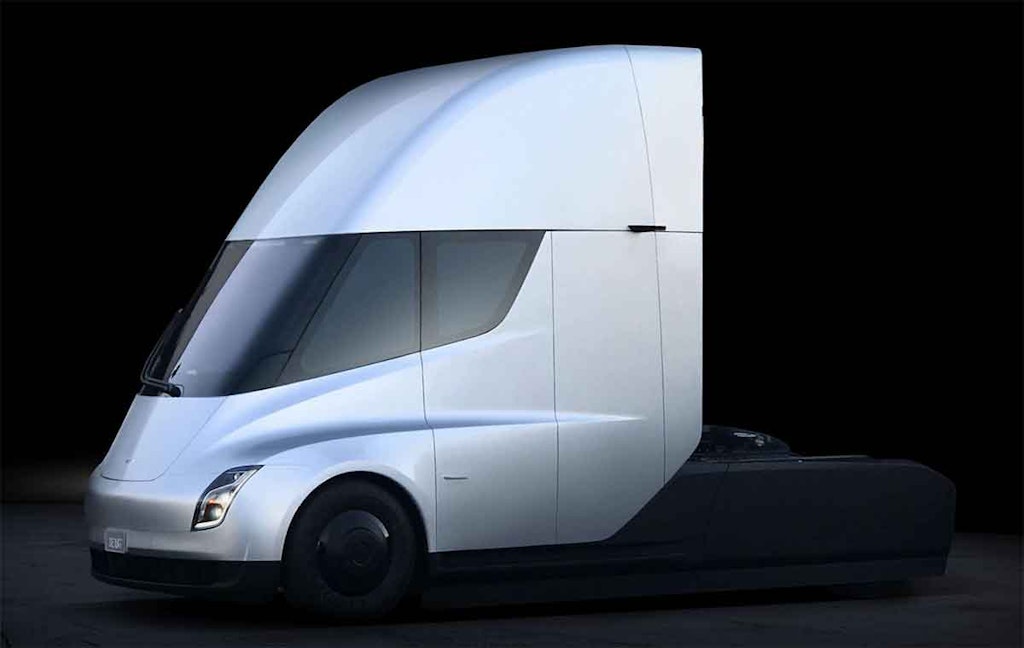
Tesla Semi all-electric truck

Upcoming all-electric Tesla Semi truck

Autonomous trucks, long-term benefits, and summary

In freight transport, autonomous technology may produce major gains. According to the U.S. Department of Energy, transportation consumes a very large share of energy and fuel. For this reason, improving transport efficiency through ADAS and automation has become strategically important.

One of the earliest envisioned applications was truck platooning. In this concept, a human-driven lead truck is followed by electronically linked automated trucks, all coordinated through sensors and vehicle-to-vehicle communication. This approach can reduce aerodynamic drag, improve fuel efficiency, reduce road space usage, and enhance safety in many operational contexts.

Today, the focus of autonomous commercial vehicles includes not only long-haul trucking but also smaller vehicles for last-mile delivery. Companies such as Daimler, Volvo, Navistar, Paccar, Ford Otosan, Waymo Via, and Tesla Semi are all part of this broader transition.

The long-term rewards could be enormous:

  • Fewer accidents caused by human error
  • Reduced injuries, fatalities, and property damage
  • Lower energy consumption through optimized traffic and shared mobility
  • Smarter transportation systems and reduced congestion on heavily traveled roads

In summary, ADAS is one of the most important development areas in the modern automotive industry. Alongside hybrid and electric vehicle development, ADAS directly addresses the most critical aspect of mobility: human safety. When more than 90% of road crashes are related to human error, every improvement in ADAS has a clear and powerful effect on reducing injuries and fatalities. ADAS is therefore not just a driving-assistance technology - it is a core foundation for the future of intelligent transportation.